
Call to ban bee-killing neonicotinoids
PAA calls for the ban of bee-killing neonicotinoids.
Australia has one of the highest extinction rates in the world. It is estimated that between 1-3 species of insects are becoming extinct in Australia every week. Pesticides are cited as a key contributor to our extinction crisis and biodiversity loss.
What are neonicotinoids?
Neonicotinoids, or neonics for short, are a type of synthetic, neurotoxic insecticide. Neonics are extremely harmful to the environment, to wildlife and to human health.
Neonicotinoids are also used for flea and tick treatment on cats and dogs, with significant environmental cost. In 2025, it was reported in the UK that songbirds are being killed by flea and tick pesticides which are being found in the nests of birds and killing the chicks. Australians birds fare no better.
Neonicotinoids are destructive to bee colonies, but are also harmful to birds on all fronts.
How do they work?
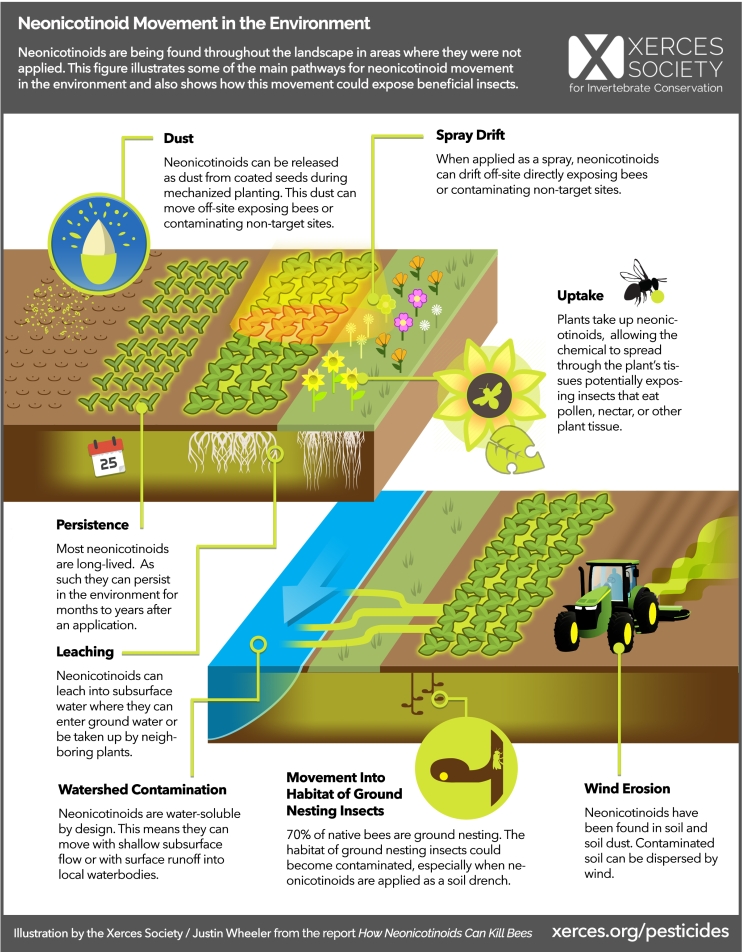
Neonics work by permanently binding to the nerve cells of insects, overstimulating, paralysing and killing them.
According to Professor of Biology at Sussex University, Dave Goulson, 1 teaspoon of neonics can kill 1.25 billion bees. That’s the equivalent of 4 truck-loads of bees. Tiny traces of these toxic chemicals play havoc with bees’ ability to forage and navigate, with catastrophic consequences for the survival of their colony.
Australian native bees, butterflies, ladybirds, spiders and other insects etc. often exhibit uncontrollable shaking and twitching when exposed to neonics, followed by paralysis and death. Even at nonlethal doses, neonics can weaken critical functions, such as an insect’s immune system, navigation, stamina, memory, and fertility.
When sprayed on crops or soil, research has shown that only 5% of the neonicotinoid active ingredient is taken up by the plant; 95% disperses into the environment or to non-target species.
Are they used overseas?
In 2018, neonics were banned in the EU.
As outlined by Professor Dave Goulson:
‘the EU decision was taken only after a team of scientists at the European Food Standard’s Agency had spent 6 months reviewing all the scientific evidence. They concluded that neonics pose an “unacceptable risk” to bees, and hence a majority of EU counties voted for the moratorium. The UK’s Environmental Audit Committee, a cross-party group of MPs, came to the same conclusion, and urged our government to support the ban. The US Fish & Wildlife Service also concurred, and have banned use of all neonics on land they administer. Most recently, a team of 30 scientists, of which I was one, reviewed 800 papers on this topic and in a series of 8 articles published in the journal Environmental Science and Pollution Research, concluded that “The combination of prophylactic use, persistence, mobility, systemic properties and chronic toxicity [of neonicotinoids] is predicted to result in substantial impacts on biodiversity and ecosystem functioning”.’
In 2018, the UK banned three neonics (clothianidin, imidacloprid, and thiamethoxam) for all outdoor use because of harm they cause to pollinators and other wildlife. Emergency use of neonicotinoids by farmers in the UK is also being phased out.
Canada, and several USA states including Connecticut, Maine, Maryland, New Jersey, Washington have banned or restricted neonicotinoids for non-agricultural uses.
Unethical export trade
The EU, despite banning neonics for use in the EU and citing them a threat to biodiversity and food security, still export and profit from sending huge quantities of neonics around the world. This includes to Australia.
In Argentina, one of the top five destinations for the EU’s banned neonic exports, beekeepers estimate they have lost 30% of their hives in the past decade. The Argentinian Beekeepers Society said ‘we consider it an act of aggression, of ecocide, and a violation of human rights to sell toxic substances that are highly dangerous to human health and pollinating insects’.
See here for a detailed report on the export by the EU of neonics.
Are neonicotinoids used in Australia?
The APVMA, Australia’s federal regulator, have approved seven neonics for agricultural and veterinary use in Australia. Many products containing these active neonic ingredients are available to buy online or even in-store (in the case of pet flea treatments).
The seven approved neonicotinoids in Australia are:
- Acetamiprid
- Clothianidin
- Dinotefuran
- Imidacloprid (the most widely used insecticide in the world from 1999)
- Thiacloprid
- Thiamethoxam
- Nitenpyram
While the EU team of experts took 6 months to conduct their review, the APVMA commenced a review into neonics in 2019. The APVMA have previously employed lengthy chemical reviews, some lasting as long as 20+ years, as a tactic to benefit industry, as Pesticide Action Australia has previously reported on here.
The APVMA is the only pesticide regulator in the OECD to be majority-funded by industry. This means the sale of neonics by agricultural chemical companies contribute significantly to the revenue of APVMA. Conversely, banning neonics would result in a significant revenue loss to the regulator. This is an untenable and systemic conflict of interest for a regulatory body.
Will crops be devastated if we ban neonics, as industry states?
We take concerns about farmers’ livelihoods seriously, and recognise the significant pressures farmers are under – including on their mental health. Exposure to agricultural pesticides puts farmers at a six times’ greater risk of exhibiting depressive symptoms, including chronic anxiety, irritability, restlessness, and sadness. Farmers have reported feeling trapped by a dependency on chemical inputs, and not see any alternatives anymore. This is a byproduct of a hugely successful industry campaign over decades to instill reliance and vertical monopolisation of inputs.
However, many farmers around the country are successfully reducing their pesticide use. Australia now has over 53 million hectares of certified organic farmland, which is nearly 70% of the global total. Profitable organic and regenerative farmers will challenge the notion that dependency on internationally-banned chemical inputs is the only approach. Reducing pesticide use has been good business for many, reflecting a customer shift in preference towards healthier and more environmentally friendly products.
As the Australian climate changes, conditions for farming will continue to be unpredictable and challenging, exacerbating these symptoms. We recognise the contributing impact that pesticides have on climate change. Lobbyists talking about the unpredictability of the Australian climate, and using this is a reason to continue the use of pesticides, must also address the fact that pesticides are derived from fossil fuels, and are a contributor to climate change. The problem cause can’t be the solution.
Concerns about how the removal of neonics will negatively impact farmers and yield have been made by agricultural chemical lobbyists all around the world. Some of the fear campaigns and exaggerated claims have been debunked here:
http://www.sussex.ac.uk/lifesci/goulsonlab/blog/neonicotinoid-protection.
Pesticide Action Australia calls for:
- Community action to reduce pesticide pollution, as we have no time to lose.
- APVMA to immediately ban the use of neonicotinoids in Australia for all agricultural and personal usage
- Australian Government to financially support farmers transition from pesticide dependency towards nature-friendly farming practices. Reversing nature’s decline will not be possible without the crucial work of farmers.
- Reform of the APVMA, to be a majority tax-payer funded, independent and science-based regulator implementing the precautionary principle and hazard-based approach
Thanks for reading, and if you like this please donate to Pesticide Action Australia and get involved.
 Pesticide Action Australia